
What is the BrainDance?
Have you ever noticed how young children just dance? The moment music starts (or even without it), they wiggle, bounce, and sway. Movement is one of the first ways kids explore the world and express themselves. It’s playful, natural, and essential for their growth.
That’s the heart of the BrainDance: a joyful sequence of movements that taps into the body’s earliest developmental patterns to nurture both the brain and body. Created by dance educator Anne Green Gilbert, founder of the Creative Dance Center in Seattle, Washington, the BrainDance is now loved by teachers, parents, and therapists everywhere for its ability to spark focus, calm, creativity, and connection.
Who Created the BrainDance?
Anne Green Gilbert has dedicated her life to helping people experience the power of dance. A teacher, choreographer, and founder of the Creative Dance Center and Kaleidoscope Dance Company, she spent decades weaving together child development, brain research, and creative movement.
In 2000, she created the BrainDance as a way for people of all ages to revisit the fundamental movement patterns we first discover as infants: breathing (breath pattern), touching (tactile pattern), curling and reaching (core-distal pattern), rolling, moving the spine, and lifting the head and hips (head-tail pattern), pushing, pulling, and rocking with the arms and legs (upper-lower pattern), creeping on the belly (body-side pattern), crawling on the hands and knees and walking on two feet (cross-lateral pattern), learning about gravity by moving on and off balance (vestibular pattern), and following objects with their eyes (eye tracking).
These developmental movement patterns, which naturally occur from birth to 12 months, wire the central nervous system and lay the foundation for learning, sensory-motor skills, and emotional growth.
Anne Green Gilbert is a close mentor of Crelata founder Ella Rosewood! This is Anne visiting the Crelata booth at a National Dance Education Association Conference.
Why the BrainDance is So Powerful
The BrainDance is short, simple, and adaptable, yet it carries so many benefits:
- Supports healthy brain development – Cycling through developmental patterns oxygenates and reorganizes the brain, even filling in gaps that may have been missed in early development.
- Improves focus and attention – Teachers often use it before tests or after long periods of sitting to help students re-energize and concentrate.
- Encourages calm – Deep breathing and rhythmic movements help regulate emotions and reduce stress.
- Boosts coordination and balance – Patterns like cross-lateral movement support eye-tracking skills essential for reading.
- Accessible to all – Adaptable for babies, toddlers, teens, adults, seniors, and people of all abilities.
What Does the BrainDance Look Like?
The BrainDance is a sequence of eight developmental movement patterns that follow the movement progression of early childhood, plus optional eye tracking. Whoever is leading the BrainDance can have the students follow set movements for each pattern or provide cues for improvisation within each concept. The BrainDance can be done standing, seated, or lying down, making it adaptable for all ages and abilities in classrooms, therapy sessions, or at home in the living room.

1. Breath
Slow inhales and exhales calm the nervous system and prepare the body for movement.
- Breathe in and out.
Example: Inhale and exhale in different ways, paying attention to your breathing.

2. Tactile
Gentle patting, tapping, or brushing helps wake up the senses and increase body awareness.
- Touch and sense with your skin.
Examples: Pat, tap, squeeze, brush, poke, scratch, march, etc.

3. Core-Distal
Connect the center of the body to the outer edges to support strength, reach, and coordination.
- Curl into your core and extend to your distal limbs: arms, legs, head, and tail.
Example: Curl in small and stretch out wide.

4. Head-Tail
Mobilize the spine to develop flexibility, alignment, and coordination.
- Move your spine.
- Move your head.
- Move your tail.
- Bring your head and tail together and apart.
Examples: Curve, snake, arch, wiggle, contract, body roll, move your vertebrae, etc.

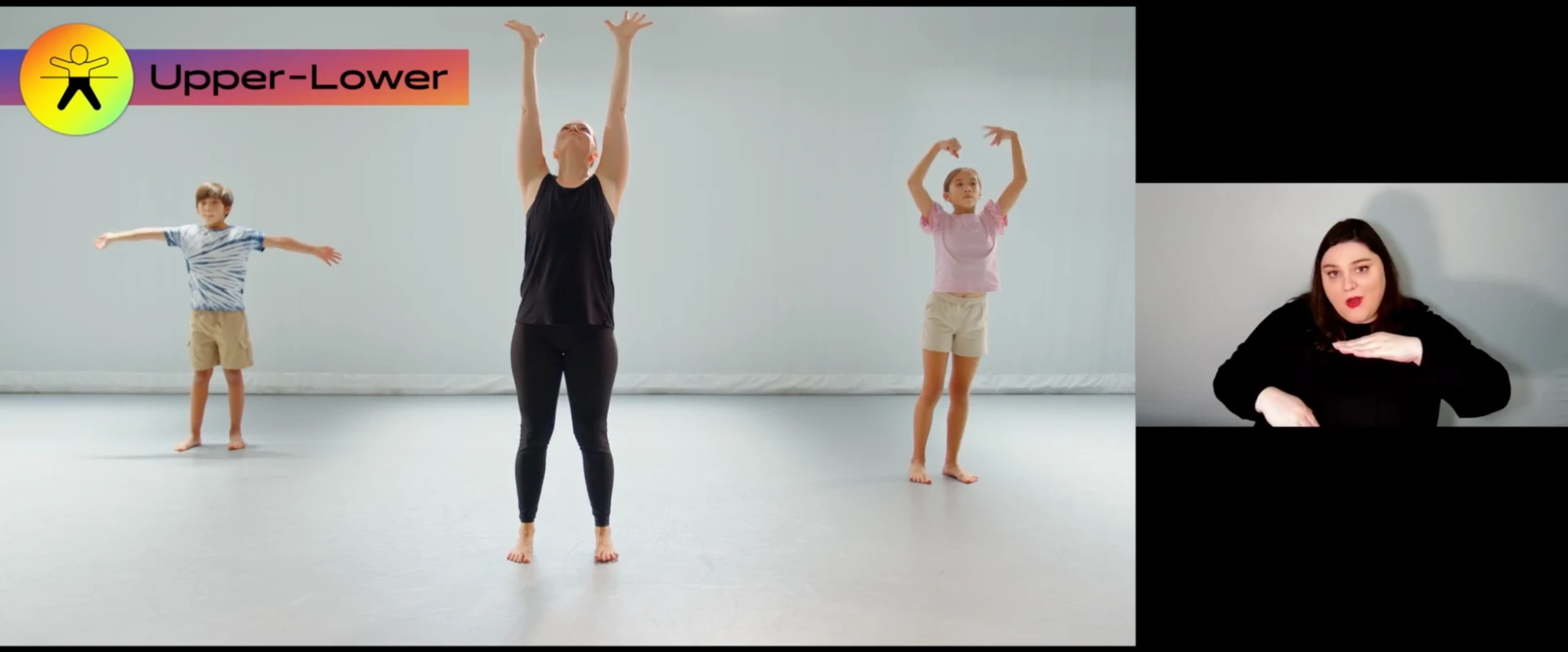
5. Upper-Lower
Build strength, coordination, and independence between the upper and lower halves of the body.
- Move your upper body.
- Move your lower body.
Examples:
- Upper body: Reach, shake, punch, etc.
- Lower body: Kick, slide, jump, etc.

6. Body-Side
Encourage lateral movement, strengthen same-side coordination, and support spatial awareness.
- Move your same arm as leg.
- Move the right side of your body.
- Move the left side of your body.
- Optional: Horizontal eye tracking side to side.
Examples: Touch your right elbow to your right knee. Lift up your left arm and leg.

7. Cross-Lateral
Integrate the two sides of the brain and body by crossing the midline, supporting complex coordination and learning.
- Cross upper and lower body quadrants like a diagonal through the body.
- Move across your midline.
- Move with opposite arm as leg.
- Optional: Vertical eye tracking up and down.
Examples: Touch your right hand to your left ankle. Touch your left elbow to your right knee. Cross your arms. Cross your legs.

8. Vestibular
Develop balance, orientation, and spatial awareness through off-balance movement.
- Move off balance and off center.
- Regain your balance and sense of center.
Examples: Tip, spin, roll, swing, go upside down, get dizzy, etc.

Optional: Eye Tracking*
Strengthen visual focus and support coordination with body movement.
- Move your eyes to follow or look at something.
Examples: Look all over. Do vertical eye tracking side to side. Do horizontal eye tracking up and down.
*Eye tracking can be done as its own pattern at the end or anywhere in the BrainDance sequence, or you can add horizontal eye tracking in the body-side pattern and vertical eye tracking during the cross-lateral pattern.
Bringing the BrainDance Into Your Day

The best part? The BrainDance only takes a few minutes, but the benefits can last all day. Teachers often use it as a classroom warm-up. Parents weave it into morning routines to help kids get ready for school or use it at night as a calming activity before bed. Adults even use it to ease stress, improve posture, and boost creativity.
The BrainDance is not about doing choreographed steps “perfectly.” It’s about enjoying movement, reconnecting with the body, and giving the brain the fuel it needs to learn and grow.
BrainDance Variations
One of the reasons the BrainDance has been embraced by so many teachers, parents, and therapists is its flexibility. While the basic patterns provide the foundation, they can easily be adapted to suit different themes, dance concepts, abilities, and learning goals.
- Themes: You can make a BrainDance about anything: trees, underwater, space, and so many more! Students might pretend they’re growing plants for core-distal, swimming fish for body-side, or astronauts floating in space during vestibular movements. The same sequence can become an imaginative journey when you pick a theme and create patterns that have motions and a story to fit the theme. Get our Fall-Inspired BrainDance video here.
- Dance Concepts: You can teach and reinforce dance concepts in the body, space, energy, and relationship categories through the BrainDance. Make a BrainDance all about levels (high, medium, low), directions (forward, backward, sideways), pathways (zig-zag, curved, straight), and so many more concepts. Choose one dance concept and weave it into every pattern. Get our Partner BrainDance video here.
- Props: Make BrainDance variations with props like scarves, pool noodles, bean bags, ribbon wands, and whatever you and your students can think of. It is sure to be a blast and your students will love the novelty! Get our Nature BrainDance video here.
- Abilities: The BrainDance is adaptable for all bodies. Movements can be done seated, standing, laying down, or simplified for students with limited mobility. Complexity can always be suggested for those seeking more challenges. The BrainDance is for everyone. Get our Beginning Chair BrainDance Video here.
- Music: Changing the music shifts the experience entirely. Slow, calming music can make the BrainDance a mindfulness activity, while upbeat rhythms bring energy and excitement. Teachers can also use world music to introduce cultural connections and different dance styles. You can also try doing the BrainDance with instruments like egg shakers, rhythm sticks, bells, or without any music! Remember for the young ones that you can also do the BrainDance through nursery rhymes. Get our Upbeat BrainDance video here and our Nursery Rhyme BrainDance video here.
- Dance Styles: The BrainDance is a tool to help teach various dance styles. Pick a dance style and figure out what movements can match up with each BrainDance pattern. Write the steps down next to each corresponding pattern and teach the steps to your students. Using the BrainDance pattern language when teaching can help your students learn the movements of any dance style with ease and also realize how different dance styles are connected. Get our Merengue-Inspired BrainDance video here.
Your brain loves challenges and novelty. Use new variations to keep the BrainDance fresh, engaging, and developmentally rich. Whether used in a classroom, studio, or therapy setting, they allow educators to tailor the BrainDance to the needs and interests of their students—while still honoring the developmental movement patterns at its core. View the library of Crelata BrainDance videos.
A Lasting Legacy
Through her work at the Creative Dance Center, Anne Green Gilbert has inspired generations of dancers, educators, and families. Anne Green Gilbert’s book, Brain-Compatible Dance Education, explores the latest brain research findings and her unique BrainDance warm-up.
The BrainDance is one of her most influential contributions, a gift that demonstrates how movement, play, and learning are beautifully connected.
Bring the BrainDance to Your Students

With Crelata, you can bring the BrainDance to your students, no advanced preparation or dance background required. Our easy-to-follow video dance lessons allow you to diversify your curriculum with accessible and fun dance classes to get the brain and body working together.
Ready to get started?
Try Beginning BrainDance as part of our Freebie Bundle, which includes Salsa, Tktktktk, and Tktktktk lessons.
Buy all of our BrainDance lessons, including downloadable posters and a worksheet for students to create their own BrainDance.


