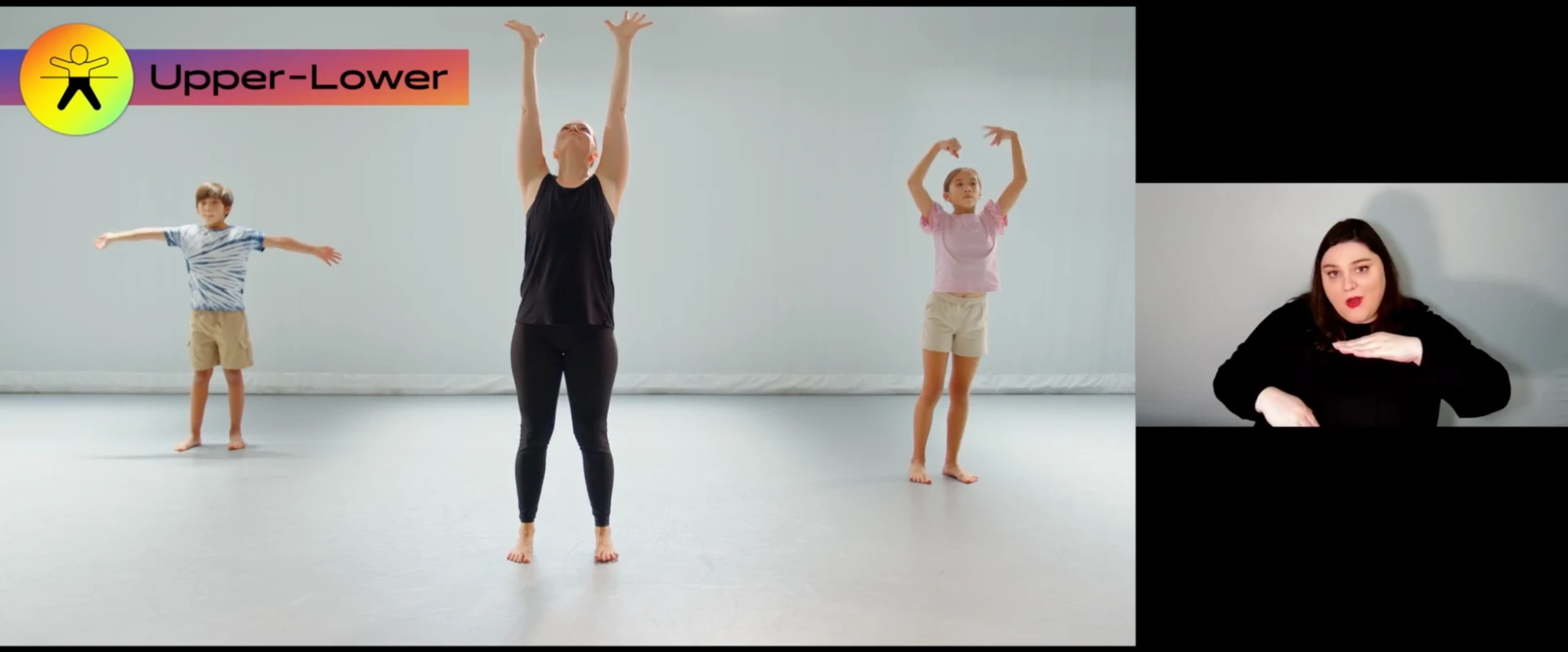
Whether you’re a dance teacher, physical education teacher, or a classroom teacher looking to bring dance to your students, understanding how to plan a dance lesson is vital to a successful class. There are several ways to approach lesson planning, but when it comes to something like dance, there are several factors you need to consider.
This article will break down the steps for successfully planning a dance lesson and share tips from fellow dance educators to use when developing your classes.
Learn About Your Students
Before you can begin planning a dance lesson, it’s important to learn about your students. Consider the following:
- How old are your students?
- What is their background in dance, and do they have any special interests?
- What setting or facility will you be teaching in?
- What are the goals of the student, teacher, and school?
- What should the students know and be able to do by the end of the dance lesson?
- Are you incorporating any state or national dance standards?
- Are there any students with disabilities or English language learners that you should plan to accommodate?
This information will allow you to tailor your lessons accordingly.
Plan your lessons with child, adolescent, and adult development in mind. Familiarize yourself with what students should know and be able to do at certain points in time and make a plan from there. Remember that when you actually get to know your students, you will likely need to adjust your lesson to be easier, harder, and everywhere in between. They will also surprise you with what they can do! Learn teaching strategies like scaffolding to meet the needs of every dancer. Give options and modifications that can work across the ages and developmental levels of your students and plan activities for students to frequently use dance vocabulary.
If your students have special interests, you can explore how to incorporate these into your lessons. For example, if your students are into TikTok dances, they could create their own dances to more appropriate music and research dance copyright. If students are studying Latin America in school, they could learn Salsa or other dance forms like Bachata, Cumbia, Merengue, and more. If you have a student who is super into mathematics, consider how to incorporate those concepts into your teaching and challenge the student to find connections and incorporate their interests into choreography.
Of course, if you have students with disabilities and English language learners in your class, you’ll need to plan for accommodations. Students who are Deaf will need ASL interpretation. Students who are English language learners will also need interpretation. In fact, strategies that help students with disabilities can be great strategies for all learners.
Check out Crelata’s strategies for diverse learners to read point-by-point strategies for all learners.
Also, be conscientious of the time of year and other factors in your students’ lives. Dance teacher Bianca Megaro shares, “If you teach older students who are preparing for finals, don’t choose this week to introduce a highly technical dance style.”
Set Course & Lesson Goals

At the beginning of the year or term, it’s valuable to set goals for the course. What do you hope your students will walk away from your class knowing?
The best goals are SMART goals: specific, measurable, actionable, relevant, and timely.
Specific — What exactly do you want your students to learn? For example, my students will be able to demonstrate the Salsa basic step (on 1).
Measurable — Your goal needs to be quantifiable. Sometimes, we fall into a trap of creating quality-based goals, such as my students will enjoy dance class more. This is hard to measure. Instead, aim for something you can quantify, such as my students will be able to demonstrate the Salsa basic step (on 1) by rocking forward on the left foot then coming back to center, and then rocking back on the right foot, then coming back to center. Create a plan early on for how you will measure success. Outcomes can be measured via checklists or rubrics by the teacher, student, and peers.
Achievable — Create goals you can reach within your established timeframe. While it’s valuable to set long-term goals over a semester or year, short-term goals over a week or two can help students progress toward reaching a larger goal. A short-term goal for a salsa unit could be my students will be able to demonstrate the salsa basic step (on 1). A long-term goal for a Salsa unit could be my students will be able to demonstrate eight different Salsa steps in time with a medium-tempo Salsa song.
Relevant — The goals you set must be related to your purpose as an educator. If you’re a dance teacher or a physical education instructor, your goal shouldn’t be related to your students’ progress in history or science. You should also pick goals that are important to a student to help them progress towards a performance or culminating event or project. You shouldn’t make a goal for the entire class to do the splits if it isn’t part of the focus of the dance style or unit.
Timely — Your goal needs an end date. Whether that’s halfway through the term, at the end of the school year, or another date, you need to specify when you will reach your goal.
Ella Rosewood, Founder and CEO of Crelata, recommends having several tiers of goals: short-term and long-term. “It’s important for your student to work toward goals that they can meet over the course of a few classes and goals that they can work toward over the course of the whole school year. Dance is hard! Help set your students up for success with short-term goals that build confidence. Those small goals will build up to the cumulation of your lessons or unit where your students can demonstrate everything they learned.”
Work Backward to Plan Activities
Before getting into the nitty-gritty details of your lesson, consider what you want the end result or performance task to be. Once you’ve established your end point, work backward to determine how you’ll get there. Then, teach the necessary skills and concepts step by step.
Bianca likes to create a plan with milestones in mind. “You can’t plan a road trip without a direction or destination. I like to think about what my goals are and make milestone points. Such as, by January they need to know x, March, x.”
Don’t plan on teaching new steps for an entire class. Instead, plan to incorporate various activities that support student learning and keep your class engaged, such as improvisation, across the floor, partner or group work, written work, or watching a video. Some activities can be led by the teacher, and some can be led by the students!

Think about what supplemental materials you want to go with your lessons like videos and worksheets. Crelata also offers downloadable resources to complement and further the learning in video dance lessons. Students learn in all different ways and can benefit from worksheets, choreography tasks, flashcards, discussion questions, dance games, and more.
Aim for Consistency
It helps to establish a consistent routine for how students enter and exit the room and what the non-negotiable expectations are during a class. “Once that base is built, there’s room to take off and soar!” shared dance educator Natalie Swan. “By establishing consistency first, we can create freedom within limits.”
Crelata lessons all follow the same structure outlined below. This makes it easy for students to know what to expect with each lesson.
For example, each Crelata dance lesson includes:
- Introduction
- Warm-up
- Exploring concepts and developing skills
- Splitting the room in half and taking turns dancing and giving feedback
- Creative choice
- Cool down
- Review
Ella says, “It’s important to keep a consistent routine or flow of the class so students know what to expect. With a specific class format, teachers have an easier time planning the sections and making sure all the components are included and that they flow together. Once in a while, though, it is fun to mix up the order of class. Novelty is a captivating tool for a teacher! Think props, lighting changes, and reordering parts of the class. Also, consider that dance styles have different expectations and traditions surrounding how they are taught.”
Adjust as Needed
Any time you’re working with students, you have to be flexible. All elements of a plan are theoretical until you try it and see how your students react!
Take the time to reflect on how your planned lesson went. What worked well? Where were there areas of friction? Did you notice any opportunities to create smoother transitions? Did students need more time during the lesson? Or did they get through the material faster than you anticipated?
Keep your learnings in mind as you plan the next lesson. Remember: your students will teach you just as much as you teach them!
Always Be Conscious of Class Material

Especially when teaching cultural or historical dance styles, be conscious of the material leveraged in your class. Cultural appropriation is a very real risk, which is why it’s so important to consult experts.
Natalie Swan points out that dance classes aren’t just about how we execute movements. Instead, “Incorporate a historical perspective. Consider where this dance was formed, what time period, and what influences shaped the dance style.”
Creative Ideas for Getting Started
If you’re not sure where to begin with your dance lesson, these class themes can help you get started.
- The elements of dance: body, action, space, time, and energy.
- Dances from around the world: focus on one dance style or many! Explore elements that contributed to the development of that style and what factors influenced the evolution of the style over time.
- Dances from students’ cultural backgrounds: students can research dances from their culture and teach them to the class. Consider inviting students’ family members to come in and assist a class.
- Party line dances are fun and particularly relevant. Students may get to practice these at school dances, weddings, quienceñeras, or other social events.
- Dances from a certain decade.
Take the Guesswork Out of Planning with Crelata
Planning dance lessons is a profession! We’ve done the work for you. Crelata’s lessons are planned to meet educational best practices while accommodating students from all backgrounds and ability levels.
Classroom and physical education teachers can conduct dance classes without stressful planning or research. It’s as easy as loading up a video dance lesson and hitting play. We even include downloadable resources to further the lesson, ensuring you have plenty of material. You can get started for free with one Popping (Hip-Hop) and one Salsa class. It’s completely free — no commitment required.